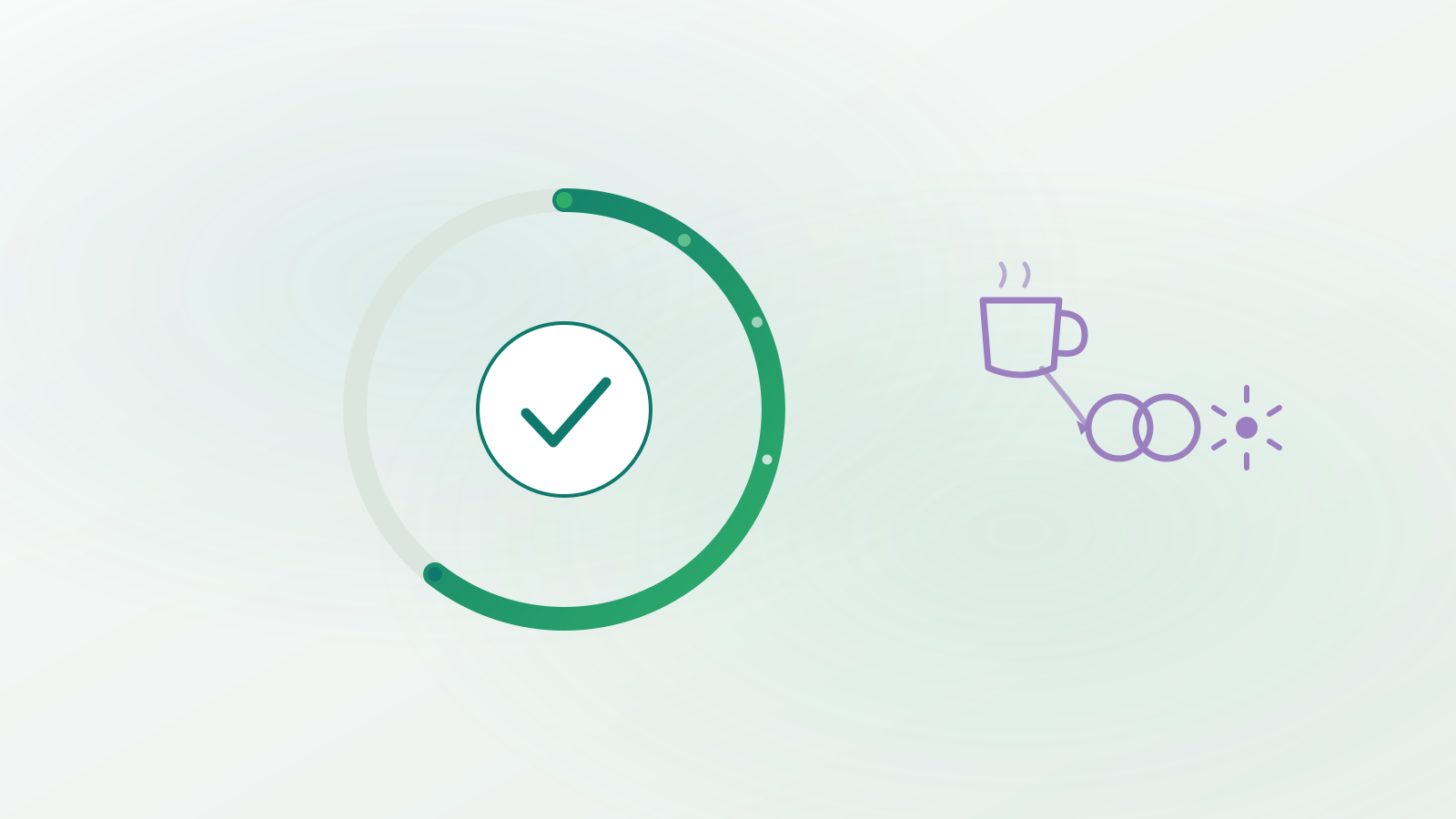
One of the hardest parts of quitting anything isn't the moment of temptation itself — it's remembering to do the new thing (check in, reach for the replacement, take a breath) at the exact moment the old habit would normally kick in. If quitting has no fixed place in your day, it's competing with everything else for your attention, right when your attention is at its worst. Habit stacking fixes that by giving your new behavior a specific, reliable trigger instead of leaving it up to memory.
Why It Matters
Habit stacking works because it borrows the strength of a habit you already have. Your brain doesn't deliberate about pouring coffee or brushing your teeth — those routines run on autopilot, cued automatically by the moment before them. James Clear popularized the term in Atomic Habits, building on Stanford researcher BJ Fogg's earlier "Tiny Habits" work, which called the same idea "anchoring." The formula is simple: after [a habit you already do], you do [the new thing]. Instead of hoping you remember to check in with Quitly sometime today, you tie the check-in to something that already happens reliably — right after you sit down at your desk, right after you park the car, right after you make coffee.
How to Build One That Actually Sticks
Start with a rock-solid existing habit. The anchor only works if it's something you do the same way, in the same order, almost every day — brushing your teeth, starting your car, making your bed. A habit you sometimes skip makes an unreliable anchor for a new one.
Keep the new behavior small enough to actually do in that moment. "After I pour my morning coffee, I'll open Quitly and check in" is realistic. "After I pour my morning coffee, I'll do a full craving-management routine" is not — it's too big to survive a rushed morning.
Pick an anchor that's physically close to where the urge usually shows up. If your habit tends to hit during a work break, stack your check-in onto whatever you already do at the start of that break, not onto something from your morning routine that's long over by then.
Say the stack out loud once or twice. "After I lock my car, I check in." Saying the full sentence — cue, then behavior — makes the link easier to remember for the first few days, before it becomes automatic.
Common Mistakes
Picking an anchor that isn't consistent enough. If the "existing habit" only happens some days, the new one attached to it will be just as spotty.
Stacking too many new behaviors onto one anchor at once. One cue, one new behavior. Trying to attach three new habits to the same moment usually means none of them stick.
Expecting it to feel automatic on day one. It won't. Research on how long these connections take to become automatic finds a wide range — anywhere from about 18 to over 250 days, with a median around two months — so the first couple of weeks are going to feel like a conscious effort, not a habit yet. That's normal, not a sign it isn't working.
Where This Fits Into a Quit Plan
A streak only grows if the check-in actually happens, and a check-in only happens reliably if it isn't relying on willpower to remember it. Stack your Quitly check-in onto something you already do without fail — coffee, commute, closing your laptop for lunch — and the habit you're building starts riding on the strength of a habit you've already got, instead of starting from zero every single day.
If what you're quitting involves physical dependency — nicotine or alcohol, for example — habit stacking is a tool for the behavioral side of quitting, not a substitute for medical support. If you're dealing with withdrawal symptoms, loop in a doctor alongside whatever system you're using to track your progress.